



How to Repair Drip Irrigation Tubing
How to seal a gash in drip tubing becomes urgent the moment you spot water spraying where it shouldn’t, soaking one section of your garden while the rest of your plants go thirsty. A split line in the middle of your drip system can quickly turn into wasted water, uneven irrigation, and mounting frustration if it’s not repaired properly.
The good news is that drip irrigation repair is usually quick, affordable, and straightforward with the right fittings and a few simple steps. Whether you are dealing with a small puncture, a long split, or damaged micro tubing, understanding your repair options can help restore your system fast.
Common Drip Irrigation Repair Methods
Drip irrigation systems can develop everything from tiny pinhole leaks to larger tubing gashes caused by weather, tools, foot traffic, or aging materials.
Understanding the most common repair methods and fittings can help you quickly restore water flow, prevent waste, and keep your plants evenly watered.
1: Identify the Type of Damage
Before making repairs, take a moment to inspect the tubing and determine how severe the damage is. The repair method depends on the size and location of the gash.
- Small Punctures: Tiny holes caused by insects, tools, or wear can often be fixed with goof plugs or repair tape.
- Medium Splits: Short cracks or tears usually require cutting out the damaged section and inserting a coupler.
- Large Gashes: Longer splits or crushed tubing sections should be fully removed and replaced with a repair fitting.
- Micro Tubing Damage: Smaller feeder lines typically need barbed couplers for proper sealing.
2: Learn About the Right Repair Fitting
Different drip tubing repair situations call for different connectors. Using the correct fitting ensures a leak-free seal and proper water flow.
- Compression Couplers: These push-fit connectors create a secure, permanent seal without tools or glue.
- Lock Fitting Couplers: These fittings can be removed later, making them ideal for systems needing future adjustments.
- Barbed Couplers: Designed for micro tubing repairs, these restore smaller feeder lines quickly.
- Goof Plugs: Best for sealing unwanted holes left behind from moved emitters or accidental punctures.
3: Choose the Right Drip Irrigation Repair Fitting
Choosing the right repair solution can save time and prevent repeat leaks. This quick comparison makes it easier to match the repair method to the problem.
Damage Type | Best Repair Option | Difficulty | Durability |
Pinhole Leak | Goof Plug | Easy | Moderate |
Small Split | Compression Coupler | Easy | High |
Larger Gash | Lock Fitting Coupler | Moderate | High |
Micro Tubing Tear | Barbed Coupler | Easy | High |
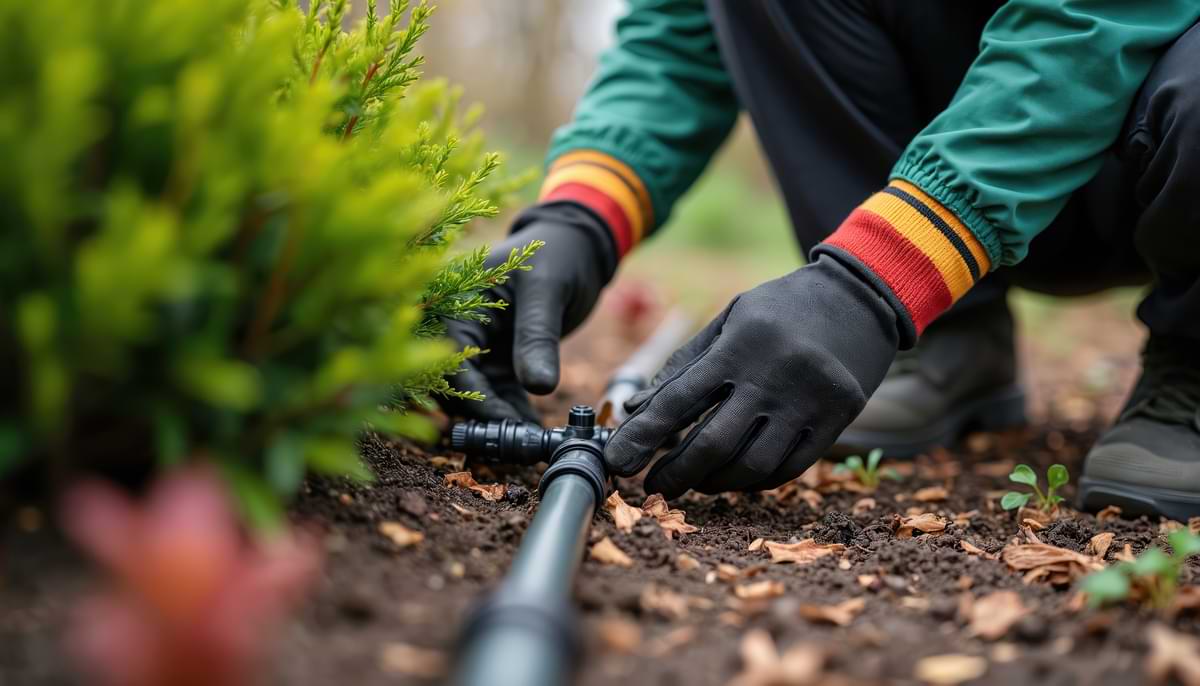
4: How to Repair Drip Irrigation Tubing in 5 Steps
Once you have the right fitting, the repair process is simple. Careful preparation helps ensure a tight, reliable seal.
- Turn Off Water Supply: Shut down the irrigation zone completely before beginning repairs.
- Make Clean Cuts: Use tubing cutters to remove the damaged section with straight, even cuts.
- Insert The Coupler: Push or lock the fitting firmly into both ends of the tubing.
- Flush The Line: Remove the end cap and briefly run water to clear dirt or debris.
- Test The Repair: Restore water flow and check carefully for leaks.
5: Prevent Future Damage
A repaired line is only as good as the care that follows. A few preventative steps can reduce future repairs.
- Inspect Regularly: Walk your system monthly to catch leaks early.
- Protect Exposed Lines: Cover tubing with mulch to shield it from sunlight and physical damage.
- Avoid Excess Pressure: Use pressure regulators to prevent tubing blowouts.
- Secure Tubing Properly: Stakes help keep lines stable and prevent accidental movement.
Keep the Good Times Flowing
Repairing a gash in drip tubing does not have to mean replacing an entire irrigation line. With the right fittings, clean cuts, and a quick flush of the system, you can restore consistent watering and keep your drip irrigation running efficiently all season long.
FAQs for Drip Irrigation Repair
How do you fix a split in drip irrigation tubing?
To fix a split in drip irrigation tubing, first turn off the water and cut out the damaged section with clean, straight cuts. Insert a compression coupler or lock fitting coupler between the two cut ends to reconnect the tubing securely. After the repair, flush the line briefly to remove debris and test the system for leaks.
Can you patch drip tubing without replacing it?
Small punctures in drip tubing can often be patched using goof plugs or repair tape designed for irrigation systems. Larger gashes or cracks usually require removing the damaged section and installing a coupler for a more reliable seal. Replacing only the damaged portion is typically faster and more durable than replacing the entire line.
Why does drip tubing keep cracking or leaking?
Drip tubing can crack or leak due to sun exposure, freezing temperatures, excessive water pressure, or physical damage from tools and foot traffic. Aging tubing may also become brittle over time, especially if left exposed above ground. Using pressure regulators, mulch coverage, and regular inspections can help extend the life of your drip irrigation system.
If you want to stay up-to-date on the latest Sprinkler Warehouse news and make the most of all of our one-of-a-kind promotions, join the Irri-Gator community today. Happy watering, Irri-Gators!