



Rain Bird Spray Heads: Small Space Marvels
Table of Contents
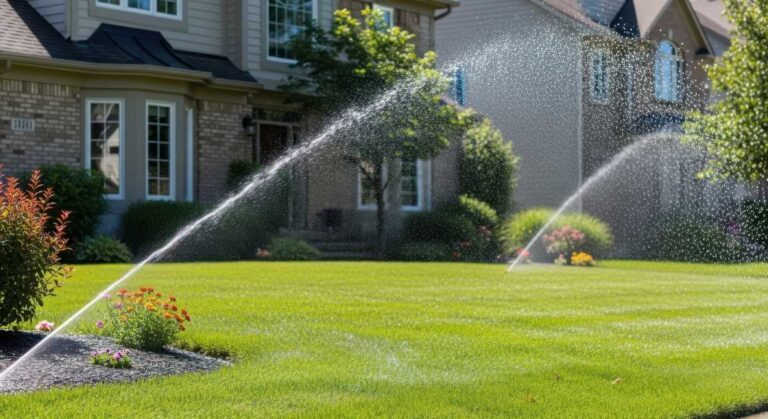
Have you ever noticed one corner of your yard soaking wet while another stays stubbornly dry? That contrast usually happens when using a fixed “showerhead” spray instead of a rotating stream.
Understanding the benefits of Rain Bird spray heads vs Rain Bird rotors ensures lower water bills and optimal garden health. According to landscape professionals, selecting the proper radius (watering distance) and arc (the pie-slice shape covered) prevents fine water droplets from misting away in the breeze, driving true water conservation.
Fixing these dry patches permanently requires knowing how the industry-standard Rain Bird 1800 sprays and 5000 series rotors operate, and why mixing them on the same watering zone damages your grass.
Why Spray Heads Are the Best Choice for Narrow Strips and Flower Beds
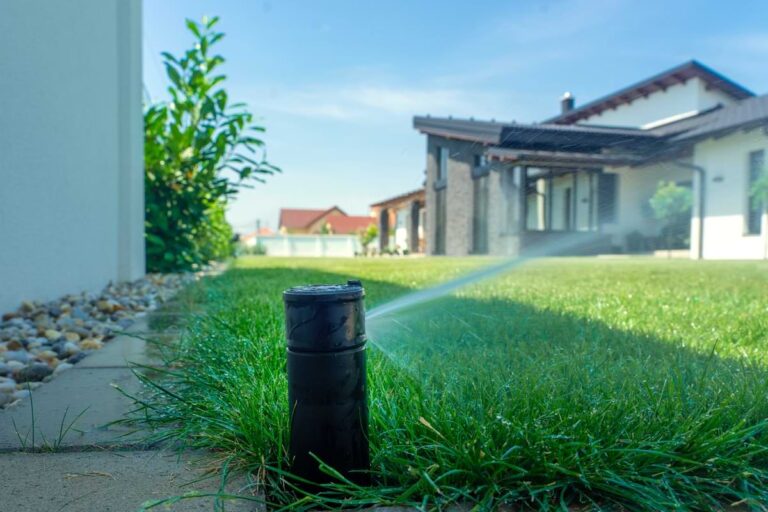
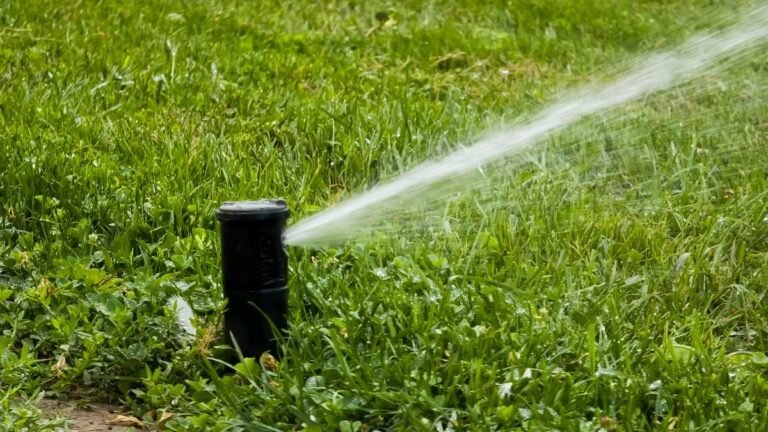
Watering narrow strips without soaking the sidewalk is exactly where the benefits of rain bird spray heads shine. Models like the Rain Bird 1800 act like fixed showerheads designed specifically for tight spaces. They deliver water very quickly—imagine a fast fire hose filling a bucket in just one minute. Because of this high volume, they need much shorter run times on your timer to keep your residential landscape irrigation zones perfectly green.
Precision is critical when setting up these areas. The exact number of spray heads needed per zone depends entirely on the nozzle’s throw distance. To ensure your lawn’s root zone fills evenly without dry spots—a professional concept called Matched Precipitation Rate—you must overlap these radius options based on your yard’s shape:
- 5-foot radius: Perfect for skinny parkways between the street and sidewalk.
- 10-foot radius: Ideal for standard foundation plantings and medium flower beds.
- 15-foot radius: Best for small, compact front yards.
To finish your setup, select the correct “pop-up height,” meaning how tall the sprinkler rises when turned on. A standard 4-inch pop-up easily clears mowed grass, while a 12-inch version sprays completely over tall shrubs. If your yard stretches far beyond that 15-foot mark, however, these short-range sprays won’t reach, forcing a switch to rotors.
When to Choose Rotors for Large, Open Lawn Areas
When lawns span wider than 15 feet, short-range heads fall short. Large backyards require rotors like the Rain Bird 5000 series. Imagine a rotor as a moving garden hose sweeping a powerful stream across the grass. By traveling back and forth, it applies water slowly. This extended soak time is a massive advantage for hard clay soils, letting moisture penetrate deeply to the roots without running off into the street.
Controlling that water requires adjusting the Rain Bird rotor arc—the specific pie-slice shape the sprinkler waters. You can lock in true rotating stream efficiency and keep your windows and sidewalks totally dry using just a basic flathead screwdriver:
- Find the left stop: Turn the pop-up stem completely left to establish your fixed starting boundary.
- Set the right stop: Twist the top adjustment socket to define exactly where the stream should reverse direction.
- Turn the radius reduction screw: Tighten the small screw located above the nozzle to break up the water and shorten the throw distance.
Mastering these irrigation system watering radius differences makes outfitting wide-open spaces straightforward. However, you should never put a slow-soaking rotor and a fast-acting spray head on the exact same timer valve. That common DIY mistake introduces the foundational rule of sprinkler design.
The ‘Golden Rule’: Why Mixing Sprays and Rotors Creates Dry Spots and Puddles
Breaking the ultimate irrigation rule—mixing sprays and rotors on the exact same zone—inevitably creates swamps next to bone-dry patches in the same yard. Since a single valve controls all the sprinklers on that specific line, every head runs for the exact same amount of time.
Because a fixed spray delivers water rapidly like a fire hose, while a sweeping rotor applies it slowly like a kitchen faucet, running both simultaneously floods the spray area long before the rotor’s grass gets a proper drink. This precipitation rate mismatch destroys any chance of achieving even lawn watering coverage.
Preventing this issue requires keeping rotors and spray heads on separate valves. If your yard layout forces you to combine different distances on one line, you must use matched precipitation rate nozzles to balance the flow, or upgrade to high-efficiency rotary nozzles.
Tackling Slopes and Wind with High-Efficiency Rotary Nozzles
Beyond fighting the wind, this slower delivery acts like a gentle rain, which is the secret to reducing irrigation runoff on slopes. Swapping your old fixed nozzles for these rotating upgrades provides instant landscape fixes:
- Thick water streams that stop wasteful wind misting.
- Slower soaking times to prevent flooded, muddy hillsides.
- Great low-pressure sprinkler head options, since these rotating heads require less force to pop up and spin.
Sometimes, poor coverage stems from high water pressure forcing too much mist out of the nozzle. To maximize water savings, upgrading to sprinkler bodies with built-in Pressure Regulating Stems (PRS) acts like a shock absorber, keeping the flow perfectly steady.
Your 3-Step Plan for Choosing the Right Rain Bird Sprinkler
Applying these mechanics effectively requires a straightforward strategy. To optimize your setup for better garden health and water conservation, use this quick decision matrix:
- Under 15 feet wide: Choose 1800 Series sprays.
- Over 15 feet wide or windy: Choose 5000 Series rotors.
- The Golden Rule: Never mix both types on the same watering zone.
Start by measuring your yard and auditing just one zone to ensure all heads match. Fixing a single mismatched area eliminates dry spots, lowers your water bill, and keeps your landscape deeply and efficiently hydrated.