



Drip Tubing Irrigation: Which One Is Right for You?
Table of Contents
Drip irrigation tubing creates the hidden network that quietly delivers water right where plants need it, weaving through garden beds, winding around shrubs, and stretching across landscapes with precision.
Drip irrigation tubing is the foundation of any efficient irrigation drip system, carrying water steadily to emitters while reducing waste and keeping roots consistently hydrated.
Drip Irrigation Tubing Sizes
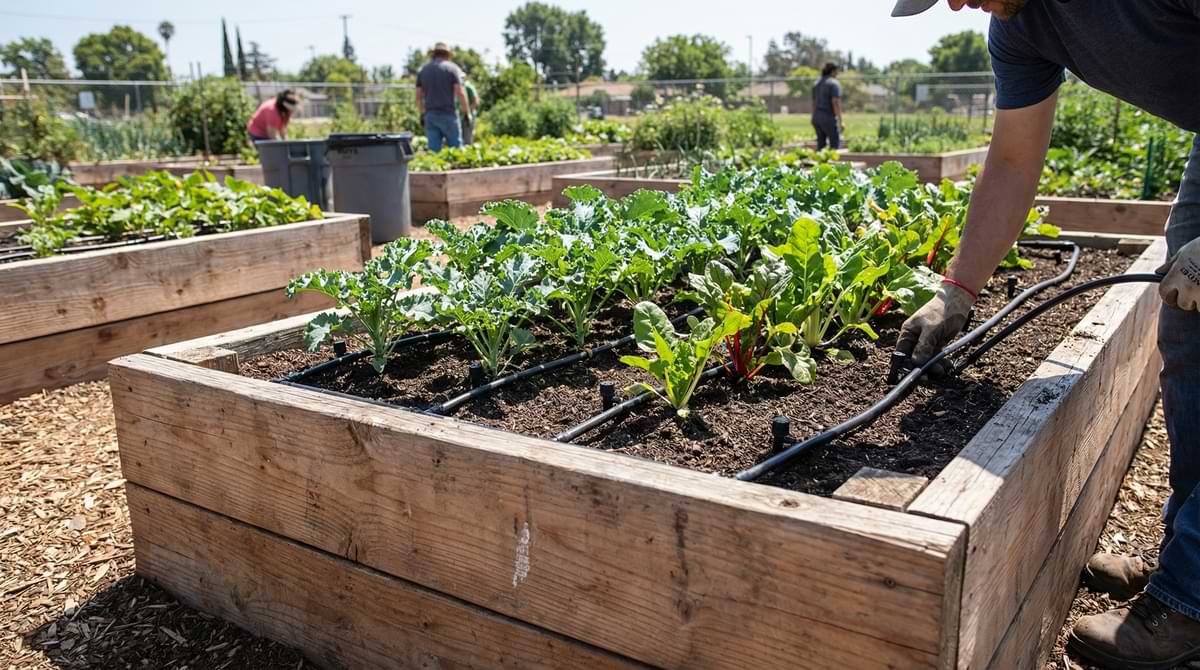
Every drip irrigation system relies on the right tubing size to deliver consistent water flow and connect properly with fittings, emitters, and accessories. Understanding how each tubing diameter functions helps you build a more efficient system from the ground up and avoid frustrating compatibility issues later.
1: Where 1/4″ Drip Irrigation Tubing Delivers Precision
1/4″ drip irrigation tubing branches off the mainline to deliver water to specific plants and tighter spaces. Its smaller diameter makes it ideal for precision watering where flexibility is essential.
- Targeted Watering: Drip irrigation 1/4″ tubing delivers water directly to individual emitters or micro-sprays.
- Easy Routing: 1/4″ inch drip irrigation tubing bends easily around containers, raised beds, and closely spaced plantings.
- Simple Expansion: It connects quickly to 1/2″ tubing using barbed fittings and punch-in connectors.
- Consistent Sizing: Unlike some larger tubing, 1/4″ inch drip irrigation tubing is generally more standardized.
2: Why 1/2″ Drip Tubing Irrigation Can Power Most Drip Systems
1/2″ drip irrigation tubing is the most common backbone used in a drip tube irrigation system because it balances water capacity with installation flexibility. It often serves as the mainline that distributes water from the source to smaller feeder lines throughout the landscape.
- Mainline Performance: 1/2″ inch drip irrigation tubing handles higher flow rates and longer runs than smaller tubing.
- Nominal Sizing Matters: “1/2″ inch” refers to trade size, not exact dimensions, so internal and outer diameters vary by manufacturer.
- Fitting Compatibility: Always match tubing specifications to fittings to avoid leaks or poor connections.
- Versatile Applications: It works well for flower beds, vegetable gardens, shrubs, and medium-sized landscape zones.
3: When 5/8″ Drip Irrigation Tubing Makes Sense
5/8″ drip irrigation tubing is another common option used by several manufacturers as a durable primary distribution line. It offers similar performance to 1/2″ systems but requires matching fittings for proper installation.
- Brand-Specific Systems: Many proprietary drip systems use 5/8″ tubing dimensions.
- Strong Water Flow Capacity: It supports larger irrigation layouts efficiently.
- Connection Precision: Exact sizing is critical since fittings are often not interchangeable.
- Professional Applications: It is frequently used in larger residential and light commercial systems.
Drip Irrigation Tubing Size Comparison Chart
Selecting the right tubing size depends on your system layout, watering needs, and compatibility requirements. Understanding the differences makes building an irrigation drip system much easier.
| Tubing Size | Primary Use | Flexibility | Flow Capacity |
| 1/4″ Inch | Individual plant connections | Very High | Low |
| 1/2″ Inch | Main distribution line | Moderate | Medium-High |
| 5/8″ Inch | Larger mainline systems | Moderate | High |
Drip Irrigation Tubing: Find The Right Fit For Your System
Drip irrigation tubing performs best when every component fits together properly from the start. Taking a few extra moments to confirm tubing dimensions, fitting compatibility, and layout requirements helps create an irrigation drip system that runs efficiently, conserves water, and keeps landscapes thriving season after season.
FAQs for Drip Irrigation Tubing
What tubing to use for drip irrigation?
The best tubing for drip irrigation depends on your system layout and watering needs. Most irrigation drip systems use ½-inch tubing as the mainline and ¼-inch tubing for smaller branch connections to individual plants. Always match tubing size to your fittings and emitter flow requirements for the best performance.
How long can a 1/4 inch drip line be?
A 1/4 inch drip line is typically best kept under 20 to 30 feet for consistent water pressure and even distribution. Longer runs can lead to pressure loss, causing uneven watering at the far end of the line. For larger layouts, connect multiple shorter ¼-inch runs to a ½-inch mainline.
Which is better, drip tape or drip tubing?
Drip tubing is generally better for permanent landscape irrigation systems because it is thicker, more durable, and designed for long-term use. Drip tape is often preferred for seasonal gardens and agricultural rows since it is lightweight and cost-effective. The right choice depends on whether your system is temporary, large-scale, or built for years of repeated use.
If you want to stay up-to-date on the latest Sprinkler Warehouse news and make the most of all of our one-of-a-kind promotions, join the Irri-Gator community today. Happy watering, Irri-Gators!