




Fine the Right Liquid Fertilizer for Lawns
Table of Contents
Liquid lawn fertilizers have become a practical solution for property owners and irrigation professionals who want efficient nutrient delivery without disrupting established turf or planting beds. When integrated into a sprinkler system, liquid fertilizer can be distributed evenly across lawns and landscapes, reducing labor while improving consistency.
Whether you manage residential turf, commercial properties, or large irrigated areas, understanding the different types of liquid fertilizer helps you choose the right formulation for your soil and plant health goals.

The Different Types of Liquid Lawn Fertilizers
Liquid fertilizers come in several forms, each designed to address specific soil conditions, plant demands, and irrigation strategies.
Understanding the differences between synthetic, organic, slow-release, and specialty blends allows property owners and irrigation professionals to select the most efficient option for consistent nutrient delivery through sprinkler systems.
1: Synthetic Liquid Lawn Fertilizers
Synthetic liquid fertilizers are engineered for precision and fast results. They are widely used in turf and commercial irrigation systems because they dissolve completely and deliver nutrients quickly.
- Fast Nutrient Availability: Nutrients are immediately available to plant roots, often producing visible green-up within days of application.
- Predictable Nutrient Ratios: Formulated NPK blends provide consistent, measurable nutrient delivery across irrigated zones.
- High Solubility: Fully soluble formulas move efficiently through injectors and sprinkler lines without leaving residue when properly diluted.
- Careful Application Required: Because nutrients act quickly, improper calibration can increase the risk of runoff, surge growth, or plant stress.
2: Organic Liquid Fertilizers
Organic liquid fertilizers focus on building soil health while feeding plants. Derived from natural sources such as fish emulsions, compost extracts, or seaweed, they support long-term biological activity.
- Soil Biology Support: Organic inputs encourage beneficial microbial activity that improves nutrient cycling and soil structure.
- Gradual Nutrient Release: Nutrients become available more slowly as soil microbes break them down, promoting steady plant growth.
- Improved Moisture Retention: Increased organic matter can help soil hold water more effectively between irrigation cycles.
- Filtration Considerations: Proper filtration and system maintenance help prevent clogging when applying organic materials through irrigation equipment.
3: Slow-Release & Stabilized Liquid Lawn Fertilizers
Slow-release and stabilized liquids are designed to extend nutrient availability over time. These products often include inhibitors or controlled-release technologies that reduce nutrient loss.
- Extended Nutrient Availability: Stabilizers slow nitrogen conversion, providing more consistent feeding between watering cycles.
- Reduced Leaching Risk: Controlled-release formulations help minimize nutrient movement beyond the root zone during heavy irrigation or rainfall.
- Balanced Growth Patterns: Steady nutrient supply reduces excessive top growth and supports stronger root development.
- Improved Efficiency In Frequent Irrigation: Landscapes with regular sprinkler schedules benefit from reduced nutrient washout.
4: Micronutrient & Specialty Liquid Lawn Fertilizers
Micronutrient and specialty liquids address targeted plant needs rather than supplying full NPK nutrition. They are commonly used to correct deficiencies or enhance turf appearance.
- Targeted Deficiency Correction: Formulas containing iron, manganese, zinc, or magnesium correct specific nutrient shortages identified through soil testing.
- Enhanced Turf Color: Iron-based liquids deepen green color without stimulating excessive vertical growth.
- Stress Support Applications: Specialty blends may include bio-stimulants or root enhancers that help plants tolerate drought, heat, or transplant shock.
- Uniform Irrigation Distribution: Injecting specialty products through sprinkler systems ensures even coverage across large turf or planting areas.
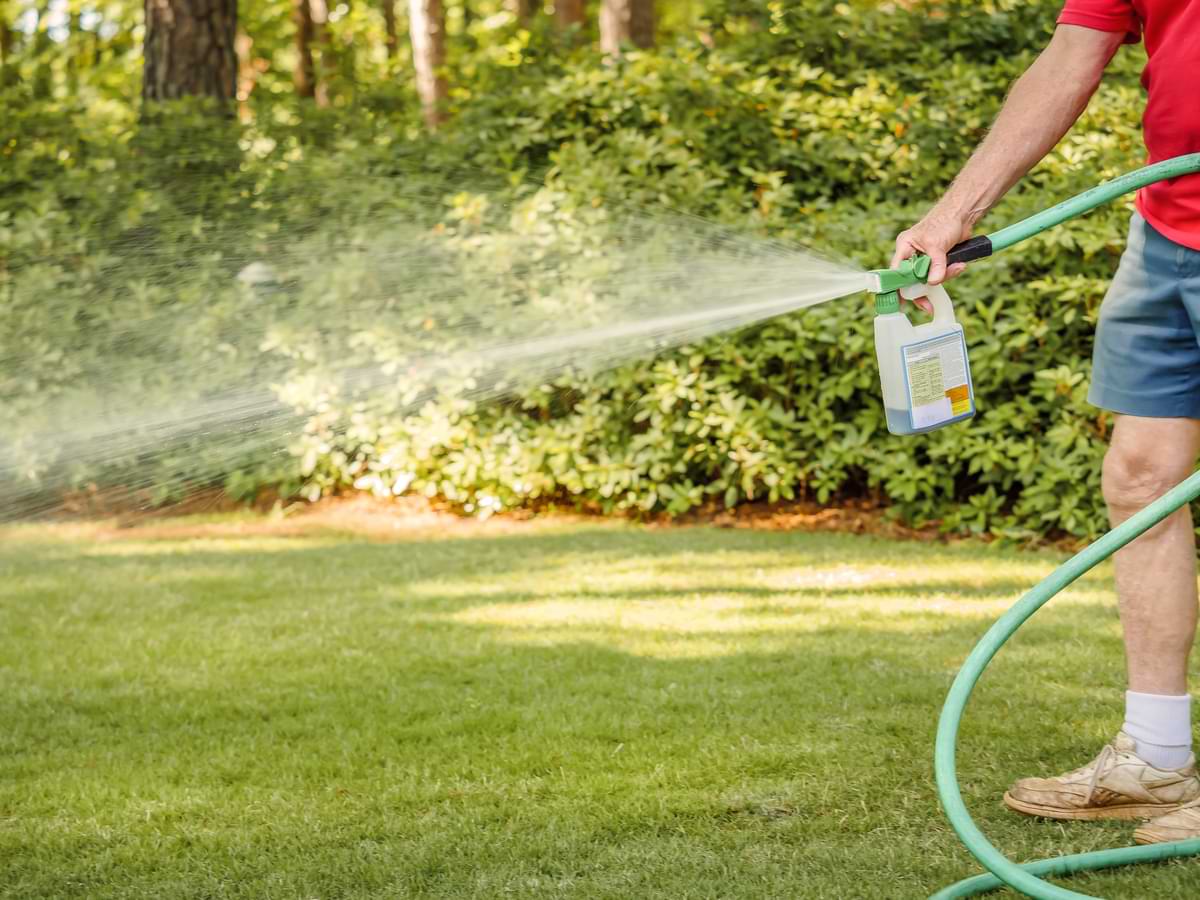
Choose the Right Liquid Lawn Fertilizer for Irrigation
Selecting the right liquid fertilizer depends on soil conditions, plant species, irrigation frequency, and long-term maintenance goals. A soil test provides the most reliable foundation for determining nutrient needs and preventing overapplication.
- Conduct Soil Testing First: Soil analysis identifies nutrient deficiencies and helps guide accurate product selection.
- Calibrate Injection Equipment Properly: Correct dilution and metering ensure consistent application rates across irrigation zones.
- Maintain Backflow Prevention Devices: Proper safeguards protect potable water supplies during fertigation applications.
- Match Product To Landscape Goals: Align fertilizer type with growth expectations, environmental considerations, and irrigation design for optimal results.
Feed Your Landscape with Liquid Lawn Fertilizers
Choosing the right type of liquid fertilizer ultimately comes down to balancing plant performance, soil health, and irrigation efficiency. When properly matched to your landscape’s needs and applied through a calibrated sprinkler system, liquid fertilizers can reduce waste, improve nutrient uptake, and support stronger root development throughout the growing season.
By combining smart product selection with responsible fertigation practices, you create a healthier landscape that performs reliably year after year.
FAQs for Liquid Lawn Fertilizers
Is liquid fertilizer good for the lawn?
Yes, liquid fertilizer is effective for lawns because it delivers nutrients quickly and evenly through irrigation systems. It promotes rapid green-up and supports strong root development. Regular, properly applied liquid feeding can keep turf healthy and resilient throughout the growing season.
Is October too late to fertilize a lawn?
October can be an ideal time for fertilizing cool-season lawns, as it supports root growth before winter dormancy. Late-season fertilization helps lawns store nutrients for early spring green-up. Avoid applying too late in the month if soil temperatures are dropping rapidly, as uptake may be limited.
Should you mow before applying liquid fertilizer?
Yes, mowing before applying fertilizer ensures nutrients reach the soil rather than sitting on top of long grass blades. It also helps the fertilizer distribute more evenly across the lawn. Be sure to avoid cutting more than one-third of the grass height at once to reduce stress.
If you want to stay up-to-date on the latest Sprinkler Warehouse news and make the most of all of our one-of-a-kind promotions, join the Irri-Gator community today. Happy watering, Irri-Gators!