



How to Best Use Fertilizer for Raised Garden Beds
Table of Contents
Raised garden beds give you more control over soil quality—but that also means nutrients can deplete faster. Pairing the right fertilizer with a consistent irrigation system keeps your plants productive, healthy, and well-balanced.
In this guide, we’ll break down how to choose the right fertilizer, when to apply it, and how to sync it with your irrigation system for the best results. If you’d like to learn how to build a raised garden bed, check out our blog.
Understanding Nutrient Needs in Raised Beds
Raised beds don’t behave like in-ground soil, especially when it comes to nutrient retention. Because raised beds tend to drain well, nutrients can wash away more quickly without a proper plan.
- Recognize Soil Depletion: Nutrients in raised beds are used up faster due to frequent watering and dense planting.
- Test Soil Regularly: Soil tests every 1–2 seasons help identify deficiencies before they impact plant health.
- Match Fertilizer To Crops: Leafy greens need more nitrogen, while fruiting plants benefit from higher phosphorus and potassium.
How to Choose the Right Fertilizer Type
Not all fertilizers work the same, and raised beds benefit from a strategic mix. The goal is to balance immediate feeding with long-term soil health.
- Use Slow-Release Fertilizers: Granular fertilizers provide steady nutrients over 4–8 weeks, ideal for consistent growth.
- Incorporate Organic Options: Compost and worm castings improve soil structure while delivering gentle nutrition.
- Supplement With Liquid Fertilizers: Water-soluble fertilizers offer quick nutrient uptake during peak growth stages.
Integrating Fertilizer With Irrigation
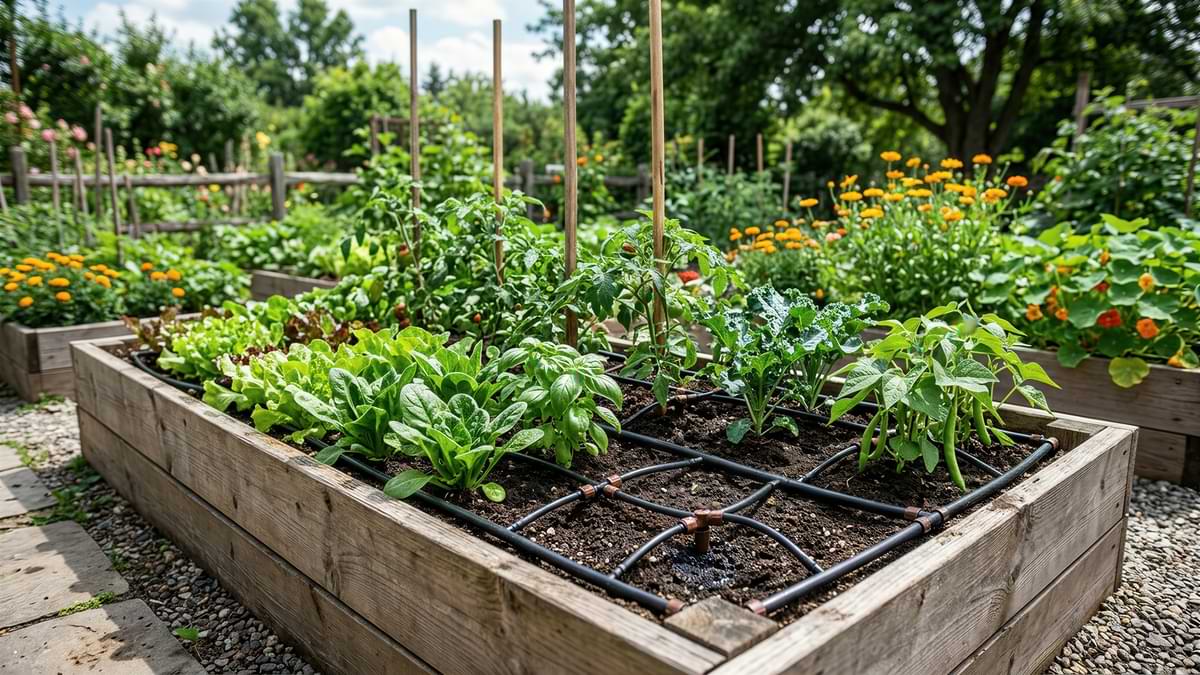
Your irrigation system plays a major role in how effectively plants absorb nutrients. Consistent moisture ensures fertilizers actually reach the root zone.
- Apply Before Watering: Fertilizer should be applied just before irrigation to help nutrients soak into the soil.
- Avoid Overwatering: Excess water can leach nutrients out of raised beds, reducing effectiveness.
- Consider Fertigation Systems: Drip systems with injectors allow precise, even fertilizer distribution.
Recommended Fertilization Schedule
A consistent schedule helps prevent both underfeeding and overfeeding. Use this chart as a general guide for raised garden beds.
| Growth Stage | Fertilizer Type | Frequency | Timing Tip |
| Pre-Planting | Compost / Granular | Once before planting | Mix into top 6–8 inches of soil |
| Early Growth | Balanced Liquid | Every 2–3 weeks | Apply after seedlings establish |
| Active Growth | Nitrogen-Rich (Leafy) / Balanced (General) | Every 2–4 weeks | Apply before scheduled irrigation |
| Flowering/Fruiting | Phosphorus-Rich | Every 3–4 weeks | Reduce nitrogen to avoid excess foliage |
| Late Season | Light Organic Feeding | Once or twice per season | Support soil health, not heavy growth |
How to Avoid Common Fertilization Mistakes
Even good intentions can lead to poor results without the right approach. A few adjustments can make a big difference in plant performance.
- Prevent Overfertilizing: Too much fertilizer can burn roots and reduce yields.
- Don’t Skip Watering Timing: Dry soil reduces nutrient absorption and effectiveness.
- Avoid One-Size-Fits-All Feeding: Different plants in the same bed may require adjusted feeding strategies.
Raised Garden Bed Fertilizer: Plant Health from the Soil Up
Raised garden beds thrive when fertilizer and irrigation work together, not separately. By dialing in your feeding schedule and watering routine, you create a system where nutrients are consistently available—and your plants can truly flourish.
FAQs for Raised Garden Bed Fertilizer
What is the best fertilizer for raised garden beds?
The best fertilizer for raised garden beds is typically a balanced blend that combines slow-release nutrients with organic matter. Compost, worm castings, and granular fertilizers with equal N-P-K ratios are commonly used because they feed plants steadily while improving soil structure. In many cases, a mix of organic amendments and water-soluble fertilizer works best for both long-term health and quick nutrient boosts.
How often should I fertilize my raised bed garden?
Most raised bed gardens should be fertilized every 2–4 weeks during the active growing season. Heavy-feeding plants may need more frequent feeding, while slower-growing crops can thrive with less. Always adjust based on plant type, soil quality, and how quickly nutrients are being used.
What fertilizer should I avoid using for raised garden beds?
Avoid overusing high-salt or chemical-heavy fertilizers, as they can build up and damage soil health over time. Do not apply too much nitrogen, especially for flowering or fruiting plants, because it can lead to excessive leafy growth with fewer yields. It’s also best to avoid untreated manure that isn’t composted, as it can burn plants and introduce harmful pathogens.
If you want to stay up-to-date on the latest Sprinkler Warehouse news and make the most of all of our one-of-a-kind promotions, join the Irri-Gator community today. Happy watering, Irri-Gators!